Kilic Ali Pasha Mosque
Mimar Sinan's 1580 mosque in Tophane, built for the Ottoman grand admiral Kılıç Ali Pasha, with a restored hamam that is open again.
Step off the tram at Tophane and the dome of the Kilic Ali Pasha Mosque (Kılıç Ali Paşa Camii) is right in front of you. This late work by Mimar Sinan stands in Istanbul's Beyoğlu district and bears the name of a famous Ottoman admiral. It sits a little inland today, but it was built on the water's edge.
History of the Kilic Ali Pasha Mosque
Kılıç Ali Pasha was born in Calabria, in southern Italy, as Giovanni Dionigi Galeni. Captured by corsairs as a young man, he rowed in the galleys and later converted to Islam. Europeans knew him as Uluj Ali or Occhiali. At the Battle of Lepanto in 1571, when the Ottoman fleet was crushed, he brought part of his squadron home. He was then given the name Kılıç, "sword", and made grand admiral. He died in 1587 and lies in the octagonal tomb in the mosque garden.
Sinan built the mosque in 1578–1580. The inscription over the gate gives the year 988 AH, or 1580. Sinan was by then in his nineties. The hamam followed in 1583. The complex also includes a madrasa, a tomb and a fountain; the madrasa may have been finished after Sinan's death.
The plan recalls Hagia Sophia, with a central dome supported by two half-domes. Historians read it as a smaller, steadier take on that model rather than a copy. Inside are 16th-century İznik tiles.
Cervantes and the mosque
The best-known story here involves the author of Don Quixote. Some researchers claim Cervantes worked as a captive on the mosque's construction. No published document supports this.
The records say something else. Cervantes fought against the Ottomans at Lepanto in 1571. In 1575 he was captured by corsairs and held for about five years in Algiers. The governor of Algiers decided to send him to Constantinople. On 19 September 1580, already chained on a galley bound for the city, he was ransomed at the last moment.
In Don Quixote, the captive's tale mentions "Uchali", a Calabrian renegade, and the narrator calls him "my master". Where fact ends and fiction begins is for you to decide.
Visiting today
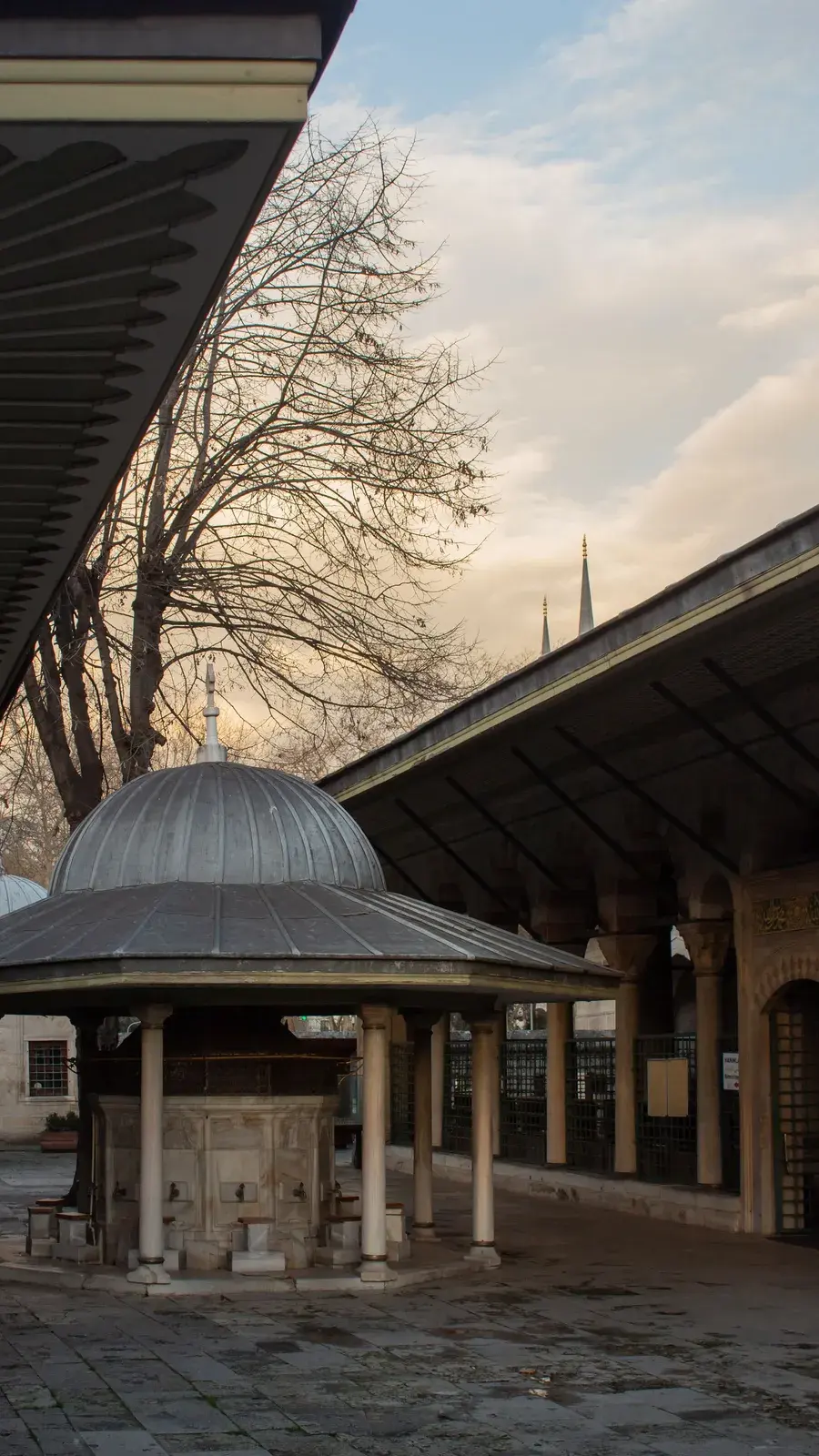
The mosque is an active place of worship. The courtyard is quiet, with the ablution fountain and the founder's tomb. The complex's hamam reopened in 2012 after a seven-year restoration and now serves women and men at separate times.
The mosque is in Tophane, right by the Tophane stop on the T1 tram, five minutes' walk from Karaköy. Avoid prayer times, especially Friday noon. Cover shoulders and knees; women should bring a headscarf. For hamam hours and bookings, see the hamam's official website.
Frequently asked questions
Who built the Kilic Ali Pasha Mosque?
The architect was Mimar Sinan. It was commissioned by the Ottoman grand admiral Kılıç Ali Pasha.
When was the Kilic Ali Pasha Mosque built?
It was built in 1578–1580. The gate inscription gives 1580, and the hamam was completed in 1583.
Did Cervantes work on the Kilic Ali Pasha Mosque?
It is a claim with no published evidence. Records show Cervantes was held in Algiers and ransomed in 1580 before he could be taken to Istanbul.
Is the Kilic Ali Pasha Hamam open?
Yes. It reopened in 2012 after restoration and serves women and men at separate times. Check its official website for current hours.
How do I get to the Kilic Ali Pasha Mosque?
Take the T1 tram to Tophane. The mosque is right next to the stop.